Best Multivitamins for Mounjaro Users
Mounjaro's superior weight loss outcomes — clinical trials show average weight reduction of 20–22% — also mean greater nutritional challenges. The more weight lost, the more significant the cumulative nutrient deficit from reduced food intake. A quality daily multivitamin is a foundational part of the Mounjaro supplement stack.
Last updated: April 6, 2026
Mounjaro's superior weight loss outcomes — SURMOUNT trials showed 20–22% average body weight reduction on the highest dose — come with proportionally greater nutritional challenges. The more dramatically food intake decreases, and the longer treatment continues, the larger the cumulative micronutrient deficit. Mounjaro users who reach their target weight after 12 months have spent that entire year in significant caloric restriction, making comprehensive nutritional support throughout treatment essential. A quality multivitamin is the most cost-efficient single intervention to close this gap.
For Mounjaro users managing type 2 diabetes, B12 demands special attention. Metformin — the most commonly prescribed diabetes medication — depletes B12 through a well-documented mechanism: it reduces B12 absorption in the terminal ileum by competing with calcium-dependent binding. Studies show that 10–30% of metformin users develop B12 deficiency over time, with deficiency rates increasing with duration and dose. Mounjaro users on metformin are thus at compounded B12 depletion risk from both reduced food intake and impaired absorption. Look for multivitamins with at least 500–1000mcg of B12 in methylcobalamin form. Vimerson Health Men's Multivitamin and Centrum Men's both address B12 needs.
Third-party tested multivitamins matter more for Mounjaro users than for the general supplement-taking population, because polypharmacy (multiple medications) increases the practical importance of purity verification. NSF certification means a product has been tested for contaminants and confirms that what is on the label is what is in the bottle — a guarantee that is surprisingly not universal in the supplement industry. Browse all multivitamins for GLP-1 users filtered by evidence tier to find certified options.
Vitamin D3 deserves emphasis beyond general nutritional sufficiency. Research on GLP-1 receptor biology shows D3 upregulates GLP-1 receptor expression — in some in vitro studies up to ninefold at therapeutic concentrations. This means D3 deficiency may literally reduce the effectiveness of your tirzepatide medication by reducing the target receptor density. Ensuring adequate D3 status (blood levels of 40–60 ng/mL are the functional target in clinical practice) throughout Mounjaro treatment is both nutritionally essential and potentially medication-enhancing. Also ensure adequate protein intake and consider creatine to prevent muscle loss.
Why this matters on GLP-1 therapy
This guide focuses on multivitamin supplementation for Mounjaro users — one of the most commonly under-addressed aspects of GLP-1 therapy. Adequate multivitamin support is considered essential by most GLP-1-informed practitioners.
What to look for in a multivitamin supplement for Mounjaro users
- 1
High-dose B12 in methylcobalamin form (500–1000mcg)
Standard multivitamins include 2.4–6mcg of B12 — the minimum RDA. For Mounjaro users on metformin with impaired B12 absorption, this is inadequate. Look for multivitamins explicitly listing higher B12 content (many GLP-1 and senior-oriented formulas include 100–500mcg) in methylcobalamin form. B12 has no established upper limit and is safe at high doses.
- 2
Vitamin D3 at 1000–2000 IU minimum
Given D3's direct relationship with GLP-1 receptor expression, ensuring adequate D3 is more clinically significant on Mounjaro than in most other supplement contexts. If your multivitamin provides less than 1000 IU, add a standalone D3 supplement. Most clinical practitioners now recommend 2000 IU daily as a maintenance dose for adults, particularly in northern latitudes or for those with limited sun exposure.
- 3
No iron for men (unless blood tests confirm deficiency)
Iron supplementation without confirmed deficiency can cause constipation, GI distress, and oxidative stress over time. Men rarely need supplemental iron. Many men's multivitamins appropriately exclude iron — verify this if selecting a general "for adults" multivitamin. If constipation from Mounjaro is already a concern, adding unnecessary iron supplementation compounds the problem.
- 4
Includes zinc and magnesium at meaningful doses
Both are commonly depleted with reduced food intake and are involved in glucose metabolism — directly relevant for Mounjaro users managing type 2 diabetes. Zinc supports insulin synthesis and immune function; magnesium supports insulin sensitivity, sleep quality, and bowel regularity. Look for at least 8–11mg zinc and 50–100mg magnesium in the daily multivitamin.
- 5
Third-party tested (NSF, USP, or Informed Sport)
For users managing diabetes and taking multiple medications, supplement quality assurance is more than a nice-to-have. Third-party testing confirms label accuracy and screens for contaminants that could interact with pharmaceuticals. USP Verified is the most accessible certification; NSF is the gold standard. Thorne and Garden of Life consistently hold these certifications.
What to avoid
Multivitamins not formulated for the age group most commonly using Mounjaro
Mounjaro is prescribed predominantly to adults aged 40–65, most of whom have type 2 diabetes. Generic "adult" multivitamins formulated for 20-year-olds may be missing the higher D3, B12, and magnesium that this age group needs. Senior-oriented formulations (Centrum Silver, One A Day 50+) often have more appropriate micronutrient profiles for the most common Mounjaro user demographics.
Products with high-dose vitamin A as retinol
Preformed vitamin A (listed as "vitamin A as retinyl acetate" or "retinyl palmitate") can accumulate to problematic levels during extended caloric restriction, when fat intake and fat-soluble vitamin metabolism changes. Some premium multivitamins include 10,000+ IU of preformed vitamin A. Standard formulations with 5000 IU or less, partly as beta-carotene, are safer for long-term daily use throughout a 12–24 month Mounjaro course.
Skipping multivitamins based on feeling fine
Most micronutrient deficiencies develop gradually and are asymptomatic until they are clinically significant. Vitamin D deficiency, B12 depletion, and zinc insufficiency may not produce obvious symptoms for months. By the time symptoms emerge — fatigue, neurological changes, immune dysfunction — the deficit is substantial and harder to correct. Consistent daily multivitamin use throughout Mounjaro treatment is a preventive strategy, not a response to symptoms.
Our top picks for multivitamin on Mounjaro
Ranked by evidence quality and customer ratings. All products are independently selected.


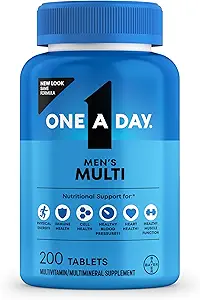


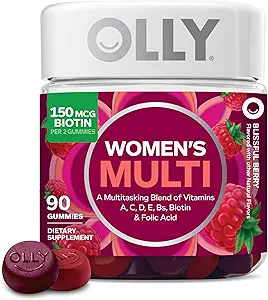
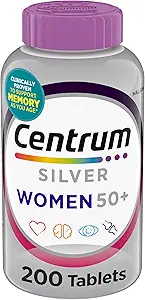
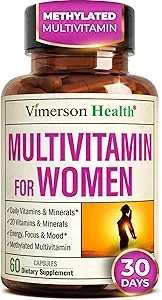
Vimerson Health
Multivitamin for Women with Methylated Vitamins and Chelated Minerals for Energy
Also available in a Men's multivitamin formula
Browse all multivitamin products
Filter by form, evidence tier, and dietary needs
Frequently asked questions
Do I need a multivitamin on Mounjaro?
Yes. Mounjaro produces the most significant appetite suppression and weight loss of any approved GLP-1 medication, meaning the cumulative nutritional deficit is also greatest. Micronutrient adequacy throughout 12–24 months of treatment requires intentional supplementation. A daily multivitamin is the minimum; users with known deficiencies (vitamin D, B12, iron) may need targeted supplements in addition.
What vitamins are depleted by Mounjaro?
Mounjaro does not chemically deplete vitamins — tirzepatide does not directly alter vitamin metabolism. The depletion occurs because users eat significantly less food, consuming fewer vitamins and minerals. Vitamin D, B12 (especially in metformin users), zinc, magnesium, and iron (in premenopausal women) are the nutrients most commonly identified as deficient in GLP-1 users in real-world data.
What is the best multivitamin for men on Mounjaro?
Centrum Men's Multivitamin is the most accessible well-formulated option — it excludes iron (appropriate for men), provides D3, and includes B12. For users who want methylated B vitamins and chelated minerals for better absorption, Vimerson Health Men's is the premium option.
Can I take my diabetes medications and a multivitamin at the same time?
Generally yes, but with one important note: calcium-containing multivitamins can reduce absorption of metformin if taken together. The interaction is modest but worth managing by taking your multivitamin with dinner and your metformin with breakfast (or per your prescriber's instructions). There are no significant interactions between tirzepatide and standard multivitamin formulations.
How much vitamin D should I take on Mounjaro?
A minimum of 1000–2000 IU of D3 daily from supplementation is appropriate for most Mounjaro users. Users with confirmed vitamin D deficiency (blood levels below 20 ng/mL) typically need 4000–5000 IU daily for 3 months to restore levels, under medical guidance. Once adequate levels are restored, 2000 IU daily is a reasonable maintenance dose. Have your vitamin D level tested at your next routine blood work if you have not already.
Does vitamin D affect how Mounjaro works?
The evidence suggests yes. Research shows that vitamin D3 upregulates GLP-1 receptor expression — the receptor that tirzepatide partially targets. D3 deficiency may reduce receptor availability and blunt the medication's effectiveness. While no clinical trials have specifically tested whether D3 supplementation improves tirzepatide outcomes, the mechanistic rationale for ensuring D3 adequacy on Mounjaro is stronger than for most other supplements.
Related guides
This page contains affiliate links. We may earn a commission on purchases at no additional cost to you. Nothing on this site constitutes medical advice. Always consult your healthcare provider before starting any supplement regimen alongside GLP-1 medications.